Before each measurement session an MFT needs to use a White Reference Standard (WRS) to setup proper L*a*b space for color determination. For that purpose, we developed the Fotolon white reference standard that, as any other WRS, efficiently reflects broadband light in relevant spectrum range.
What may be not immediately obvious is the visible pattering on the Fotolon surface.
Indeed the surface of a new Fotolon sample isn’t flat, it has some irregular bumps.
The pattern is carefully designed to make the surface Lambertian i.e., to make reflected light angular distribution independent of the incident light direction.
That property is not easily achieved. In general, surface roughness is insufficient to make it Lambertian and it takes lots of experimenting before one arrives at satisfactory surface pattern.
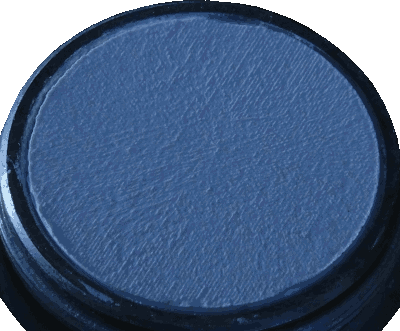
The picture is dark to better see the surface pattern.
This sometimes overlooked feature makes the MFT measurements quality robust to small mechanical displacements and, more importantly, less sensitive to changes in ambient light.
If the WRS surface was flat or, God forbid, glossy, specular reflections from the surface could corrupt the color change calculations of $\Delta E$ and thus the determination of sample lightfastness!
For the same reason, one should not use glossy weights securing sample position during measurement. The weights might reflect light into light fiber input and distort the measured spectrum.
So, please, avoid touching the Fotolon surface. Keep it clean and preserve the texture.
